Crawl Space Mold Remediation in Gulfport, MS
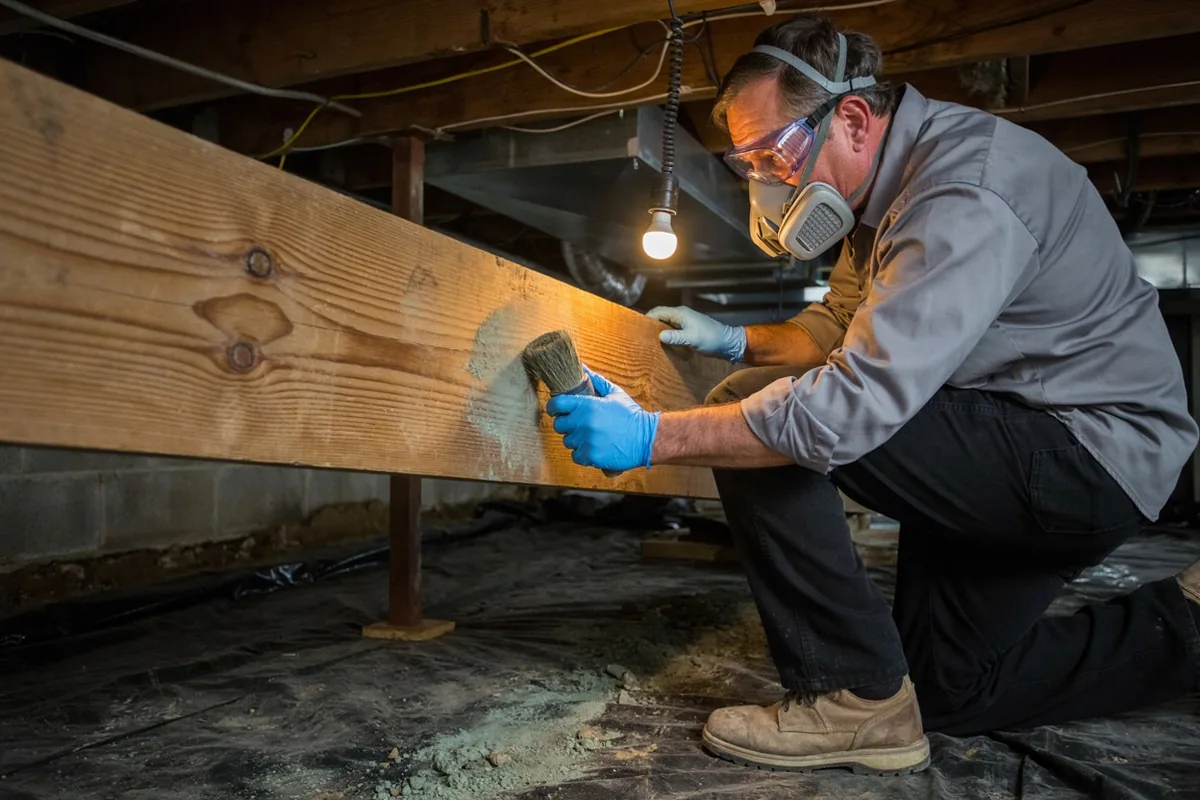
There’s a soft spot in the hall floor that wasn’t there last year. The house smells like the bayou after every rain, and it seems to come up through the boards. You shined a light under the house and the insulation is hanging out of the joist bays with something white and fuzzy on the wood above it. Call and tell us what you saw under there. We handle crawl space and under-house mold in Gulfport, Long Beach, Pass Christian, and across the bay.
Under a raised house on this coast
A lot of the beachfront went up on piers and pilings after 2005, and the older raised cottages in Pass Christian, Bay St. Louis, and Waveland were always that way. Open underneath means Gulf air — heavy, warm, salty — moves through the space all summer and condenses on anything cooler than it is: supply ducts, water lines, the underside of the subfloor in an air-conditioned house. A raised coastal house can hold damp air underneath the same way a crawl space does. Add a dryer vent that dumps under the floor, a gutter that dumps at a pier, or ground that stays wet after a high tide, and the joists are wet more days than they’re dry.
What’s under the floor comes up into the house
- The air under a raised house moves up through the floor; a musty smell after rain is often coming from below, not from the room.
- Wet insulation hanging from the joists holds moisture against the subfloor long after the ground dries.
- Cold duct and water lines under the floor sweat all summer in Gulf air.
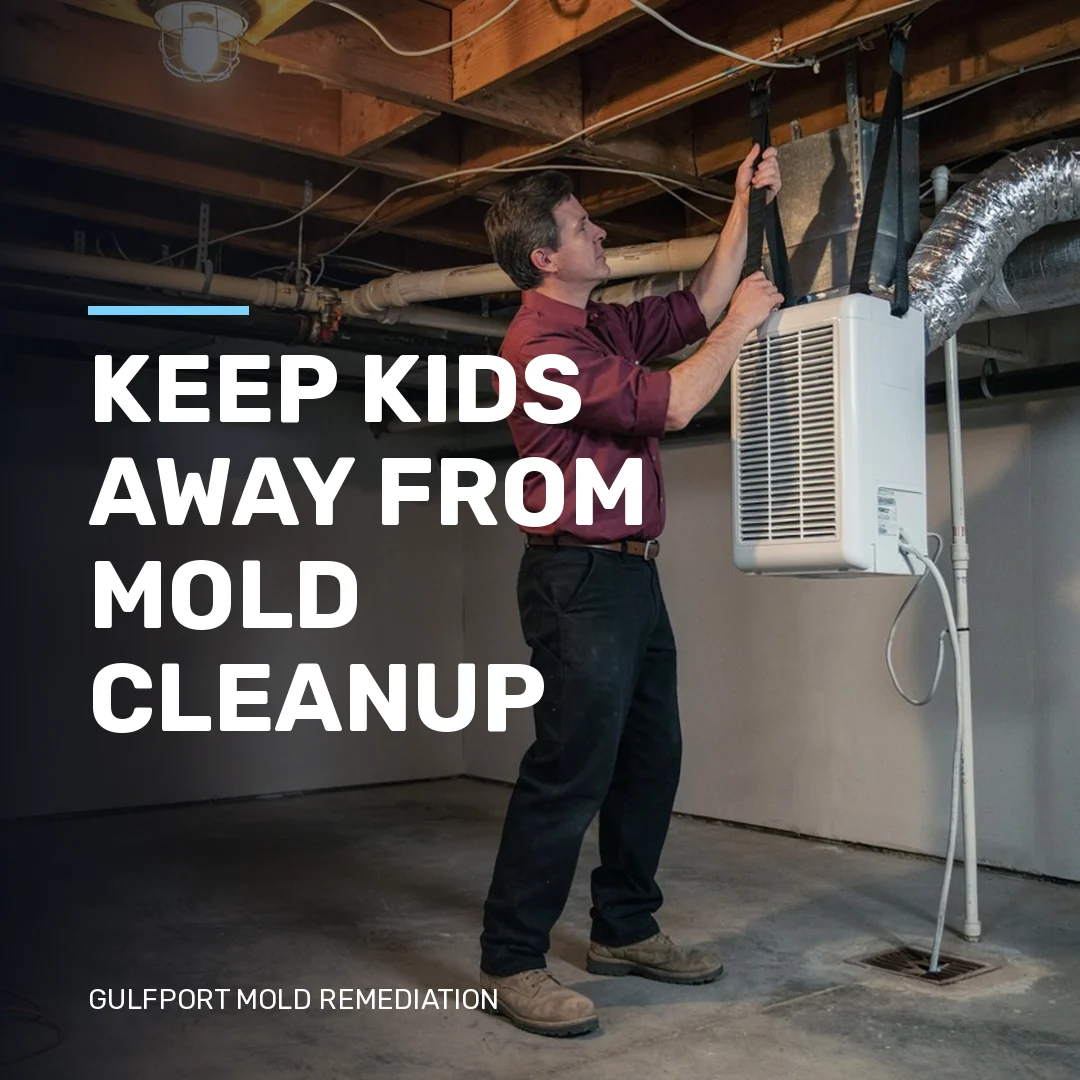
- EPA, CDC, and FEMA say to keep kids away from mold cleanup — that includes the space under the house.
Tell Us What You Saw Under There, 24/7
What the work looks like
The space under the house gets closed off and put under negative pressure where the layout allows it. Wet, moldy insulation comes out in bags. Joists, beams, and the underside of the subfloor stay and get cleaned in place, then HEPA-vacuumed. If a section of subfloor has gone soft, it comes out from above and the room over it gets sealed for the work. Nothing gets re-insulated until the wood reads dry. Then we tell you what has to change — the drainage, the vent, the ground cover, the duct insulation — for the space to stay dry.
Gulfport notes
The elevated houses along Beach Boulevard and in Long Beach have a story underneath: enclosed parking or storage that floods on a bad tide, mechanicals hung between the pilings, and a lot of duct. In Pass Christian and Bay St. Louis the old raised cottages have low, dark crawl spaces with dirt floors. Diamondhead and Kiln sit higher but wetter — pine ground that holds water after a week of rain. If the smell comes up through the floor, call and tell us what got wet.