HVAC and Duct Mold Remediation in Gulfport, MS
The system kicks on and for about ten seconds the room smells like a wet basement, then it fades until the next cycle. Or there’s a dark ring on the ceiling around one supply vent that comes back no matter how many times it gets wiped. Gulfport runs air conditioning most of the year, and every hour it runs, cold metal and cold duct in a hot attic sweat. Call and tell us what you smell when the system starts. We handle HVAC and duct mold in Gulfport and along the western Mississippi coast.
Where it grows
At the evaporator coil, where condensation is the whole point and the drain pan can overflow or sit wet for weeks. In the plenum and the first few feet of duct off the air handler, where the air is coldest. Inside insulated flex duct that sweated onto its own liner all summer in the attic. Around supply registers, where a cold grille meets a humid room. EPA says condensation near the cooling coil is a major factor in moisture contamination of duct systems, and it says wet or moldy insulated duct can’t be cleaned — it gets replaced.
Cold duct in a hot attic sweats
- Gulfport runs the air most of the year, and cold duct in a hot attic sweats onto the insulation below it.
- Gulfport humidity doesn’t take the winter off, so a coil that was wet in July is wet in December.
- EPA says a system you suspect is contaminated shouldn’t be run — it can spread mold through the house.
- A dark ring around a vent can be growth on the grille, or the first visible sign of growth in the duct behind it.
Tell Us What You Smell When It Starts, 24/7

What the work looks like
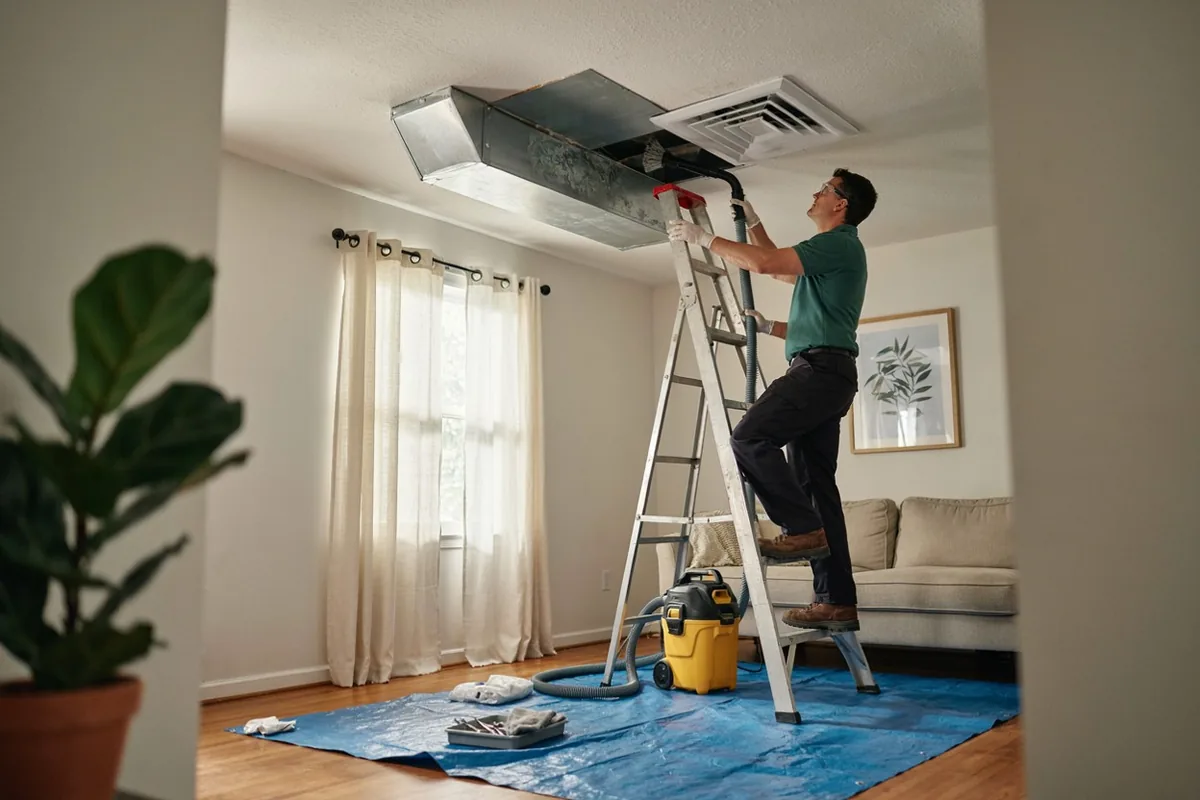
The system stays off until the work is done. The air handler and the affected duct runs are opened under containment. Hard surfaces — the coil housing, the plenum, sheet-metal trunk — get cleaned and HEPA-vacuumed. Wet or moldy flex duct and duct-board come out and get replaced, because the growth is in the liner. Registers come off and get cleaned or replaced. If the ceiling drywall around a vent is stained through, that section comes out from below. Then we tell you what has to change — the drain, the insulation on the duct, the way the attic breathes — so the system stops making the water that fed it.
Gulfport notes
The raised houses along the beach often run duct under the floor, where Gulf air moves through all summer and cold pipe sweats onto the subfloor. The slab houses in Orange Grove, Lyman, and Bayou View run it through the attic, where it bakes and drips. A house that sat closed with the air off for a season and then got switched back on can push a summer’s worth of growth through every room in an afternoon. If the smell comes with the cycle, call.